
An escape-resistant kennel is not defined by one heavy lock. The latch, keeper, door frame, opening direction and the parts an animal can reach all work together as a system.
For veterinary hospitals, boarding facilities, shelters and pet resorts, this matters because the same kennel may be opened, cleaned and checked many times a day. A design that is secure but awkward for staff can create a different operational problem. The practical goal is a door that resists repeated animal pressure while remaining predictable for trained staff to operate.
This guide explains the details a buyer should confirm before ordering a custom 304 stainless steel kennel or replacement kennel door.
1. Start with the animal and the operating risk
“Dog kennel” can describe very different applications. A calm boarding dog, a recovering hospital patient and an anxious or highly motivated escape-risk dog do not place the same demands on a door.
Before selecting a lock, define:
- the typical animal size and weight range;
- whether the enclosure is for short-term holding, overnight boarding, isolation or recovery;
- whether dogs may push, paw, bite or repeatedly work at the latch area;
- how often staff need to open the door;
- whether the kennel is supervised continuously or checked at intervals.
This information helps determine whether a standard latch is sufficient or whether a more protected, escape-resistant arrangement should be reviewed.
2. Treat the latch and door as one system
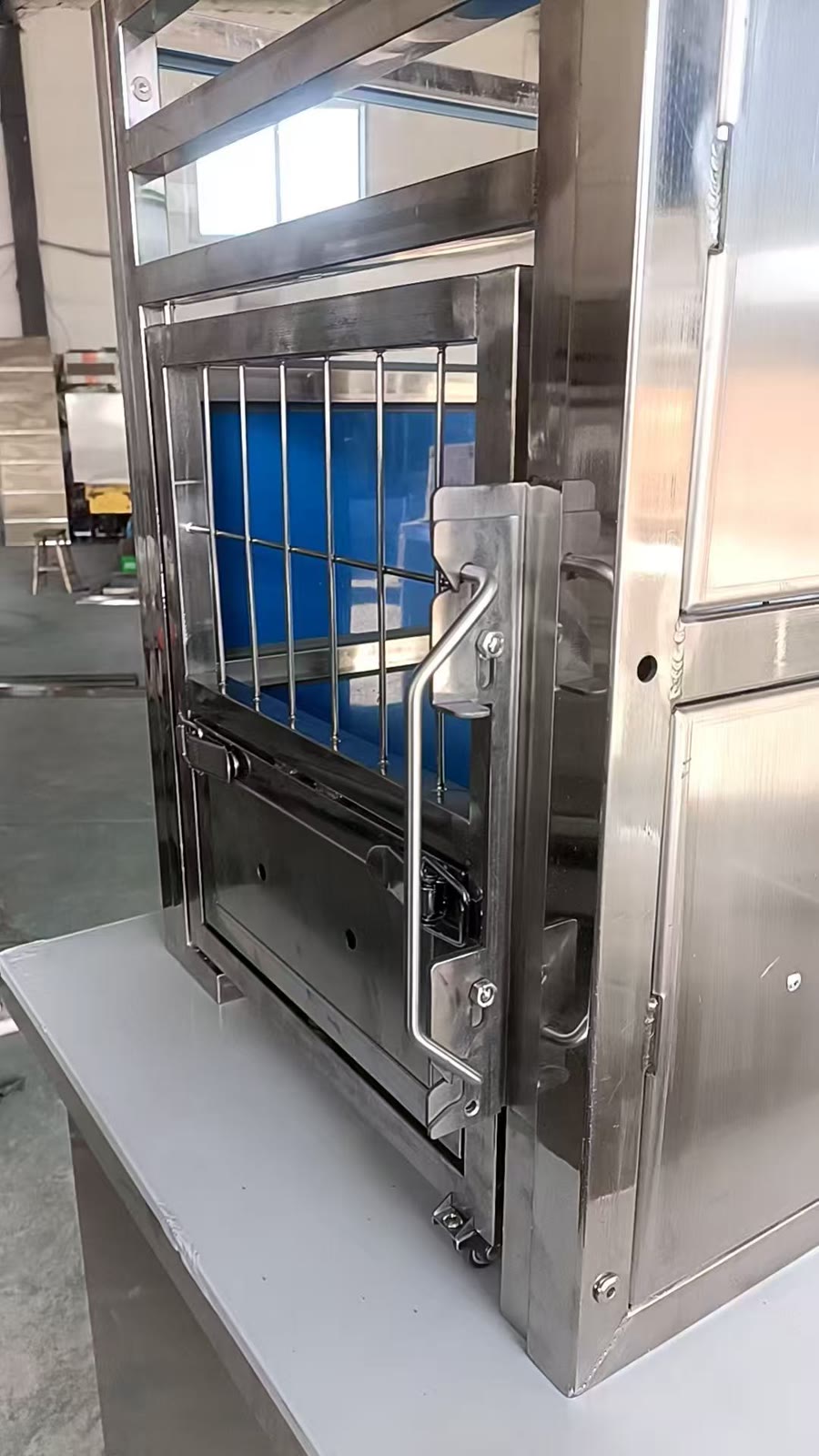
A strong latch cannot compensate for a flexible door frame or poor alignment. If the door moves under pressure, the keeper and latch may no longer engage as intended.
For a custom project, review these details together:
- latch type and release movement;
- handle position and what can be reached from inside;
- keeper location and engagement depth;
- door-frame stiffness and hinge support;
- clearances around the door;
- opening direction and staff standing position.
Tianze’s custom boarding kennel doors can be made to a confirmed opening size, with the latch, handle and keeper arrangement reviewed as part of the complete door.
3. Check what the dog can reach
Many practical security problems happen because part of the handle, linkage or keeper can be reached through the bars. A dog does not need to understand the mechanism. Repeated pawing or pushing may be enough to find movement in an exposed part.
Ask the supplier to review the lock from both sides of the door. The inside view should show whether an animal can directly touch, lift or pull any release component. The outside view should show whether staff can operate the lock without placing hands close to the animal.
The right solution may be a different handle position, a protected release area or a project-specific latch arrangement. It should be selected for the actual door and animal risk rather than added as a generic accessory.
4. Balance security with staff workflow
Veterinary and boarding teams may open a kennel dozens of times during cleaning, feeding, medication and patient checks. An overly complicated system can slow staff or encourage inconsistent operation.
During specification, ask:
- Can trained staff confirm visually that the door is fully latched?
- Can the lock be operated while controlling the dog?
- Does the handle position suit left- or right-hand access?
- Are there pinch points or awkward reaches?
- Can the lock be cleaned without dismantling the whole door?
For higher-risk areas, extra security may be appropriate, but the operating steps should still be clear and repeatable.
5. Design for cleaning and drainage
304 stainless steel is widely used in animal-care equipment because it suits frequently cleaned environments and can be fabricated into durable custom structures. Material choice alone, however, does not make a kennel easy to maintain.
Review the whole enclosure for:
- accessible internal corners;
- removable trays or floor components;
- gaps where hair and debris can collect;
- drainage direction where required;
- access around hinges, keepers and latch parts;
- compatibility with the facility’s normal cleaning process.
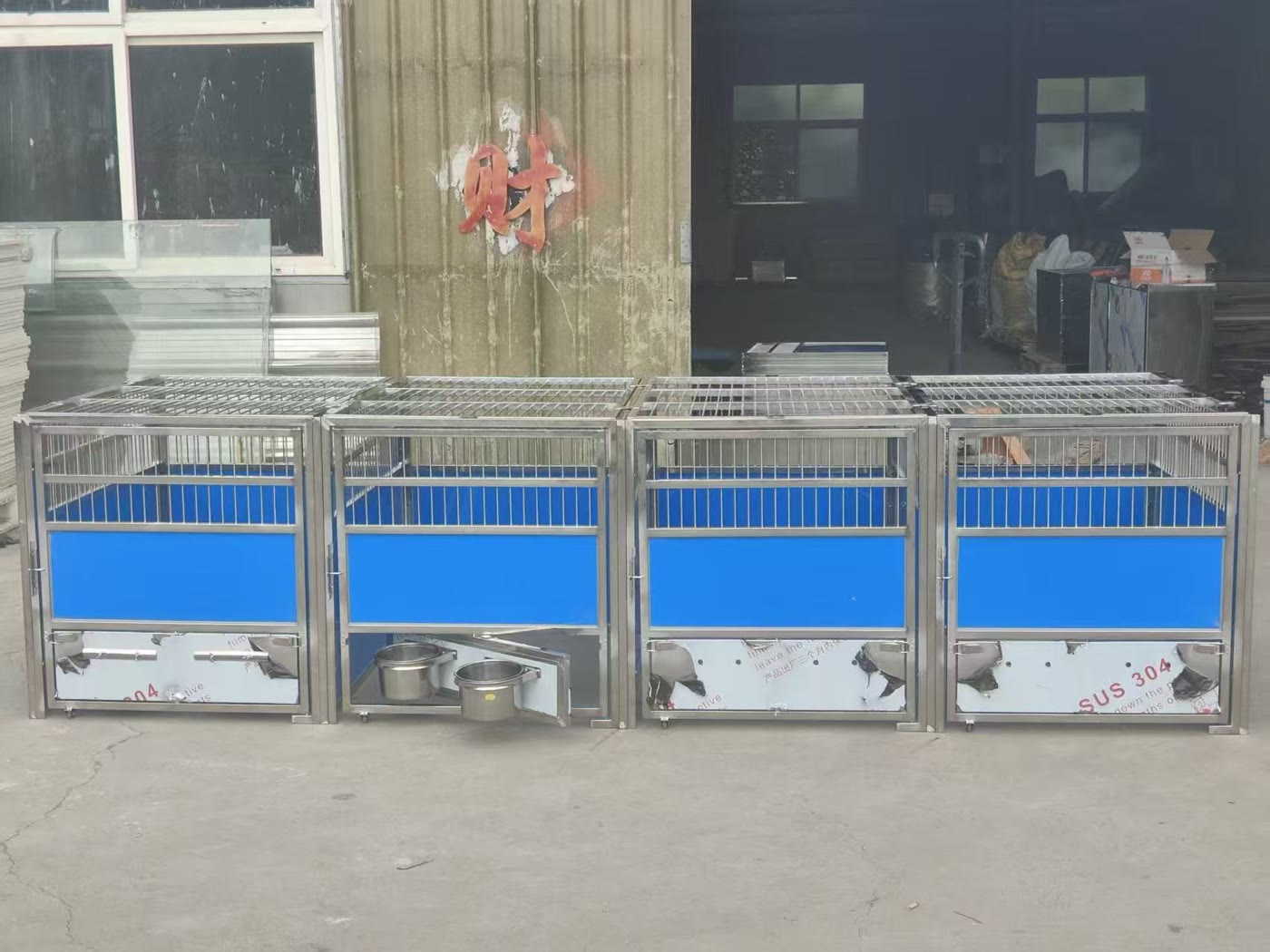
For clinical wards, a custom veterinary cage bank may combine different compartment sizes, trays, dividers and door arrangements within one wall layout.
6. Confirm the opening and surrounding structure
Replacement kennel doors must fit the real opening, not an approximate catalogue size. Small differences can affect frame clearance, latch alignment and installation.
For an initial review, provide:
- clear opening width and height;
- photos taken square to the opening;
- wall, panel or frame material around the opening;
- preferred hinge side and opening direction;
- floor level and any drainage channel;
- number of doors or compartments;
- destination city and project quantity.
A simple marked-up photo is often enough to begin. The final dimensions and structure should be confirmed before production.
7. Specify the rest of the kennel, not only the lock
The door is one part of a commercial enclosure. Buyers should also confirm:
- overall kennel dimensions;
- single, double, multi-bay or multi-tier configuration;
- bar, panel or combined infill;
- removable tray, divider or floor requirements;
- fixed feet or lockable castors;
- wall fixing or freestanding arrangement;
- export packing and site handling constraints.
Tianze’s commercial stainless steel dog kennel systems are made as project products rather than one fixed catalogue model. Dimensions, doors, locks, trays, dividers and mobility can be reviewed together.
Questions to ask before approving a kennel
- What animal and operating risk is the latch designed for?
- Can the animal reach any release component from inside?
- Does the door remain aligned when pressure is applied?
- Can staff confirm that the latch is fully engaged?
- Are the latch and keeper accessible for cleaning?
- Are the opening dimensions confirmed from the actual site?
- Which details are included in the approved drawing or specification?
Frequently asked questions
Is an escape-resistant lock a single standard design?
No. The appropriate arrangement depends on the door format, animal risk, staff routine and existing opening. The latch, keeper, handle and frame should be reviewed together.
Can a custom stainless door replace an existing kennel door?
Yes, subject to a review of the clear opening, surrounding structure, hinge side, floor condition and required lock operation.
What information is needed for an initial quotation?
Send the opening or overall kennel dimensions, animal type, quantity, reference photos, preferred door direction and delivery city. Missing details can then be identified before a formal quotation.
Can distributors request OEM dimensions?
Yes. Repeat dimensions, private-label discussions, mixed configurations and project packing can be included after the specification is confirmed.
Request a project review
Send one drawing, one opening size or one reference photo to info@tzstainless.com. Tianze Stainless will identify the missing specification points before preparing a custom quotation.
Related pages:
- Custom 304 stainless steel kennel systems
- Boarding kennel doors
- Veterinary cage banks
- Supply capabilities
Start Your Custom Kennel Project
Send your dimensions, quantity and one reference photo. We will review the missing details before preparing a quotation.
Technical reference points 2 verified external sources
These sources frame buyer-side specification questions. They do not state that a Tianze product is certified or compliant; final requirements are confirmed for each order.
- ISO 15510:2014 — stainless steel chemical compositionsMaterial-grade reference used when the ordered stainless grade is specified and verified.
- WOAH — Terrestrial Animal Health Code, dog housing (Chapter 7.7)Buyer-side context for kennel size, occupancy, cleanability and animal welfare; local rules and the approved project specification remain decisive.