
Where will the cabinet operate?
Record indoor, coastal, wash-down, food-preparation, clinical or chemical-exposure conditions.
MATERIAL SELECTION GUIDE
316 is not an automatic upgrade for every project, and 304 is not suitable by default for every chemical or coastal exposure. Start with the cabinet location, cleaning regime, chloride exposure, temperature and the components covered by the grade.
ASSDA describes 304 as a widely used general-purpose stainless grade and 316 as having better resistance to pitting in chloride environments. That difference does not replace application review. Weld condition, finish, maintenance, temperature and cleaning chemistry also matter, and the buyer must identify any mandatory project requirement.
These authorised manufacturing-partner photographs show relevant construction and configuration details. They do not prove the material, thickness, certification or specification of a future order.
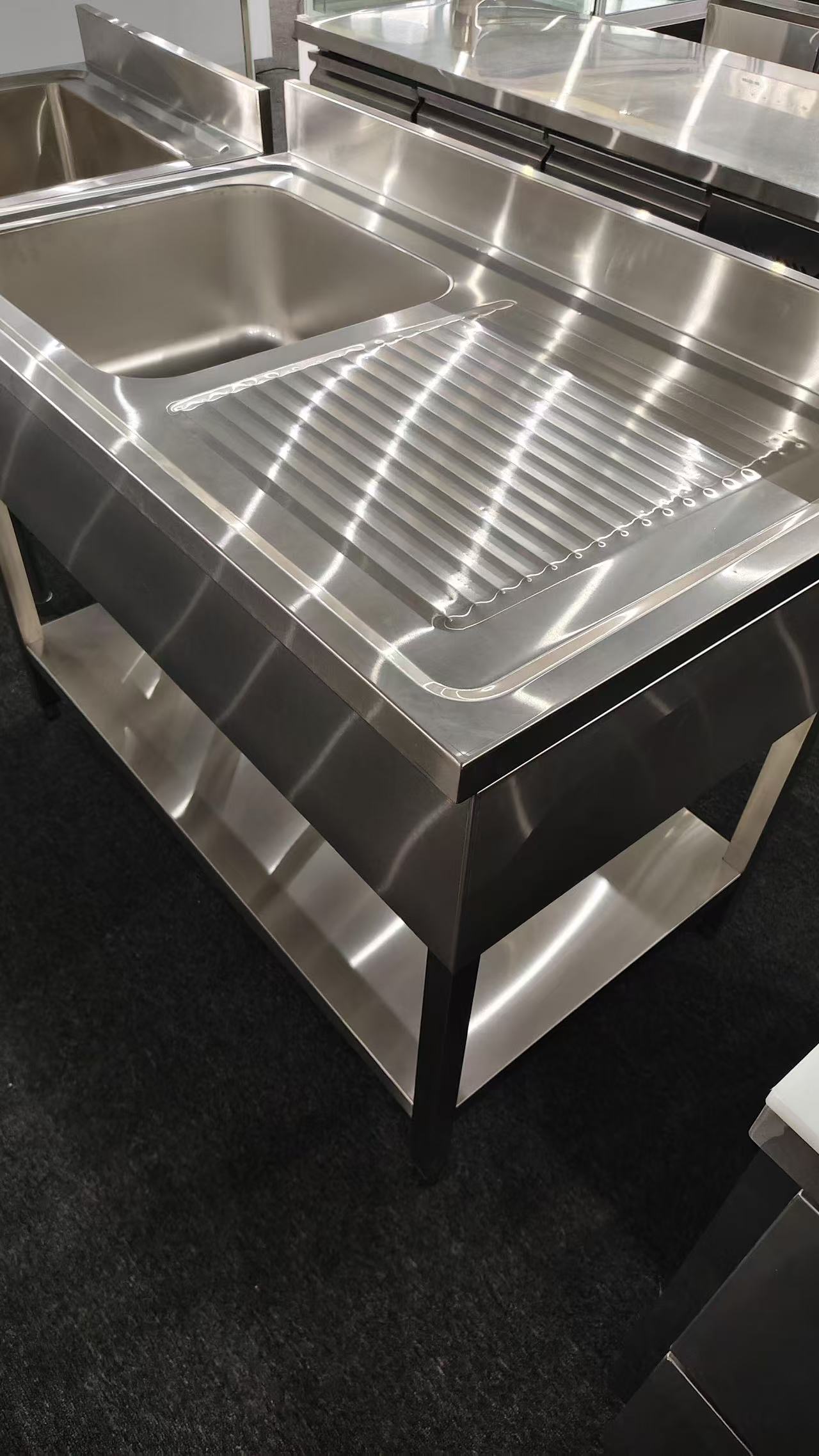
Finish, seams, corners and interfaces must be reviewed together with the nominated stainless grade.
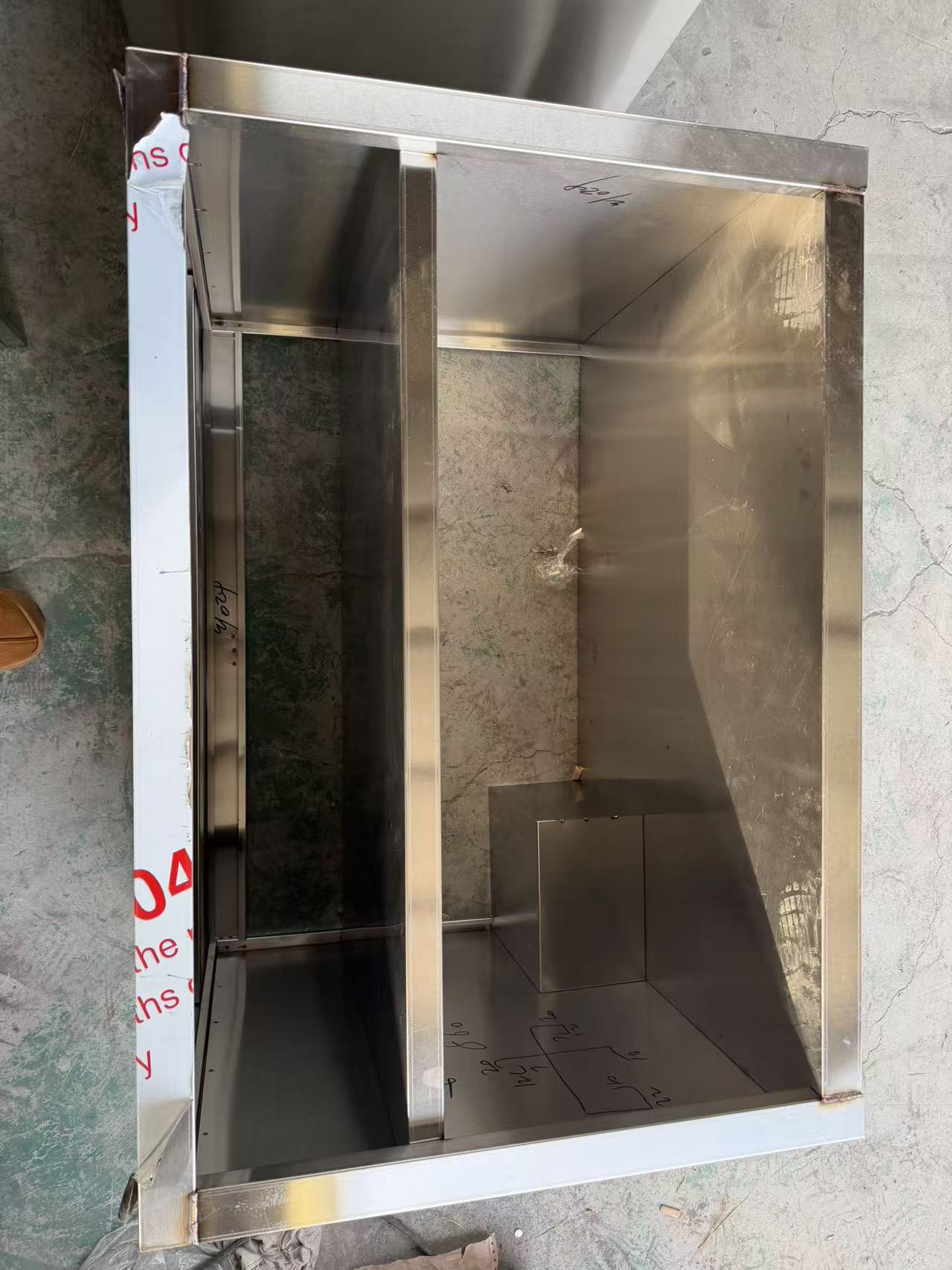
The body, shelves, back, doors and internal fittings should not be assumed to share one grade or thickness.
Use this table as a purchasing brief. Final values and inclusions are confirmed only in the approved drawing, written specification and accepted quotation.
These questions expose scope gaps that can change price, fabrication, packing or site responsibility.
Record indoor, coastal, wash-down, food-preparation, clinical or chemical-exposure conditions.
List food, salt, cleaners, sanitisers, acids, alkalis and any prolonged wet contact.
Do not assume a 304 or 316 label automatically covers the entire assembly.
The buyer and relevant project consultant should identify mandatory site or regulatory requirements before order approval.
Known information can be sent now. Mark unresolved items TBC instead of allowing the supplier to guess.
316 generally offers better resistance to pitting in chloride environments, but the suitable choice depends on exposure, temperature, cleaning chemistry, fabrication, finish and maintenance. The project requirement must be reviewed.
A grade name alone does not confirm the complete cabinet or its suitability. The buyer should identify food-contact use, cleanability and any applicable project requirement; material, component coverage and finish are then confirmed in writing.
A mixed material scope can be reviewed, but every component and interface must be clearly identified in the drawing, BOM or written specification.
The required evidence should be agreed before order confirmation. It may include supplier documentation, material records or an agreed inspection method, subject to the actual scope and availability.
No. It provides buyer-side selection questions and references. Product and destination requirements must be confirmed for the actual order.
These sources frame buyer-side specification questions. They do not state that a Tianze product is certified or compliant; final requirements are confirmed for each order.
PROJECT REVIEW
Tell us the application, known dimensions, quantity and destination. Email drawings or photographs separately if available.
Start a cabinet enquiry →